
What a proper AI chatbot integration engagement actually includes — from omnichannel deployment to CRM and EHR connectors — and how to evaluate one.
A proper AI chatbot integration engagement covers more than dropping a widget onto a website. It should include conversational design, intent modeling, systems integration, security hardening, and performance analytics, delivered on a path that moves from a scoped pilot to full-scale deployment rather than a single big-bang launch.
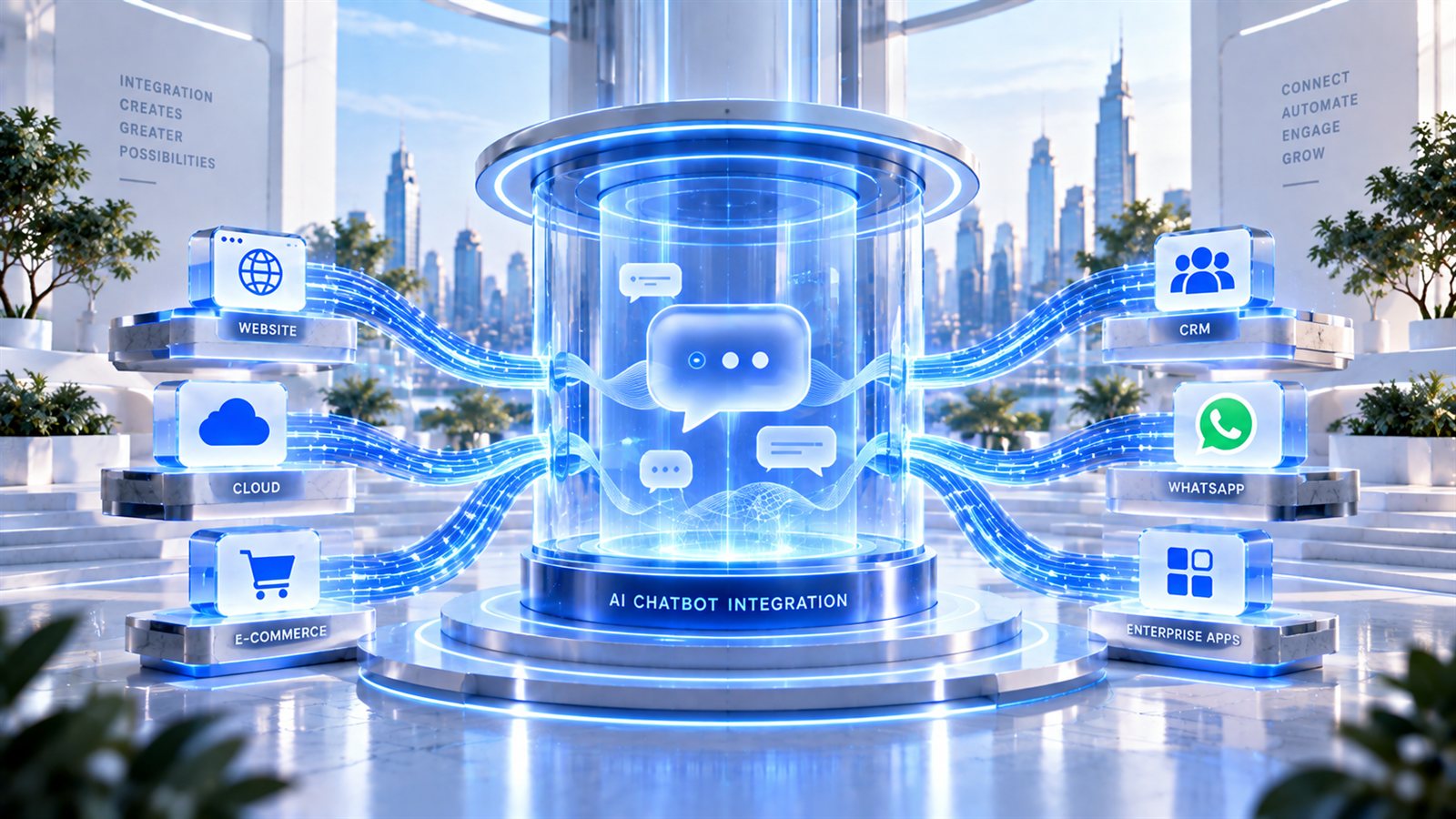
Coverage should span every channel customers actually use — web widgets, mobile SDKs, WhatsApp, Instagram, Messenger, SMS, IVR, and voice assistants — backed by secure connectors into the systems that make conversations useful: CRMs, ERPs, EHRs, and commerce platforms, so the chatbot has real context instead of generic scripted answers.
The highest-value use cases cluster around two areas: revenue (guided selling, promotions, and cart recovery tied to live inventory and order data) and support (instant answers, ticketing, returns, and knowledge search that lower cost-to-serve). In regulated industries like healthcare, that extends to appointment booking, medication reminders, and EHR integrations built with compliance in mind from day one.
When evaluating a provider, look for a trial-first engagement — transparent pricing and a validation window to test KPIs, latency, and integration fit before committing to a wider rollout — plus a clear path from a discovery workshop, to a pilot on one or two priority use cases, to expansion once the pilot proves out.
What to ask a chatbot integration provider
These questions separate a provider who has connected a chatbot to live systems from one who only sells a widget:
- Which route will you use on our platform, and which licence does it need? Many API and bot connector routes sit above the entry plans.
- Where will messages, logs and customer records be stored, and in which country?
- When the chatbot stops, who receives the conversation, with what context, and how does control come back?
- How will you measure resolutions? Ask for a test set of your own real conversations, because a customer who gives up can look like a resolved case.
- Who keeps the chatbot current after launch, and what does that cost?
- When would you tell us to use our platform's own AI agent instead? With one channel, one help desk, modest volume and no data residency rule, it is often the better buy.
What an integration costs
Expect three costs: the platform's AI or API fees, channel fees such as WhatsApp's per-message rates, and the build. The build depends on how many systems the chatbot reads and writes to. Our guide to what an AI chatbot costs to build works through the figures.
Where to find the service
Webify.AI builds custom chatbots and connects them to help desks, CRMs and messaging channels. Our AI chatbot integration page sets out the routes for Zendesk, Salesforce, HubSpot, WhatsApp and Genesys, how a project runs and what it costs. To compare more platforms first, read which platforms integrate custom AI chatbots.
Key takeaways
- A complete integration engagement covers conversational design, systems integration, security, and analytics — not just a chat widget.
- Omnichannel coverage (web, WhatsApp, SMS, voice) matters more than any single channel.
- CRM/ERP/EHR connectors are what give a chatbot real context instead of generic answers.
- A trial-first, pilot-then-scale engagement model reduces the risk of a costly, ill-fitting rollout.